
Flood Coverage for Texas Small Businesses: What to Know
Flood insurance is critical for Texas small businesses. Learn how commercial property flood coverage works and get a free quote from Texas Policies.

By Jeffrey Connors
For a small business owner in Texas, the phrase "100-year flood" is often misunderstood. Many believe it means a flood happens once a century, but in reality, it means a 1% chance of severe flooding in any given year. That statistic becomes even more sobering when you consider that recent Texas storms have produced rainfall totals that exceed even the 500-year flood plain maps. As a commercial property owner, you might assume your standard policy protects you, but most commercial property insurance policies in Texas explicitly exclude flood damage. This gap can leave your building, inventory, and equipment exposed to devastating financial loss. Understanding commercial property insurance flood coverage for your Texas small business is not just about reading a policy; it is about ensuring your company can survive the next major weather event.
Texas leads the nation in flood-related disaster declarations, and severe weather patterns continue to intensify. From Houston to Dallas, San Antonio to the Gulf Coast, no region is truly immune. The good news is that you do not have to navigate this complex coverage alone. An independent agency like Texas Policies can help you compare flood insurance options from multiple carriers, ensuring you get the right protection without overpaying. This guide will walk you through everything you need to know about securing flood coverage for your commercial property in Texas, including the difference between NFIP and private policies, what is actually covered, and how to prepare for the claims process.
Why Standard Commercial Property Insurance Excludes Flood Damage
It is a common misconception that a commercial property policy covers all water damage. In the insurance world, there is a clear distinction between water damage from a burst pipe and flooding from external sources like heavy rain, storm surge, or rising rivers. Most standard commercial property policies in Texas cover the former but not the latter. Flood is considered a separate peril, and it requires a dedicated flood insurance policy or an endorsement to your existing commercial package.
The reason for this exclusion is rooted in risk pooling. Floods are catastrophic events that can affect entire regions simultaneously, unlike a fire or theft which impacts a single property. Insurers cannot spread the risk of a flood across a diverse pool of policyholders without charging astronomical premiums. This is why the National Flood Insurance Program (NFIP) was created in 1968. It provides a government-backed safety net for property owners in participating communities, but it has limitations that may not fully cover the value of your Texas business.
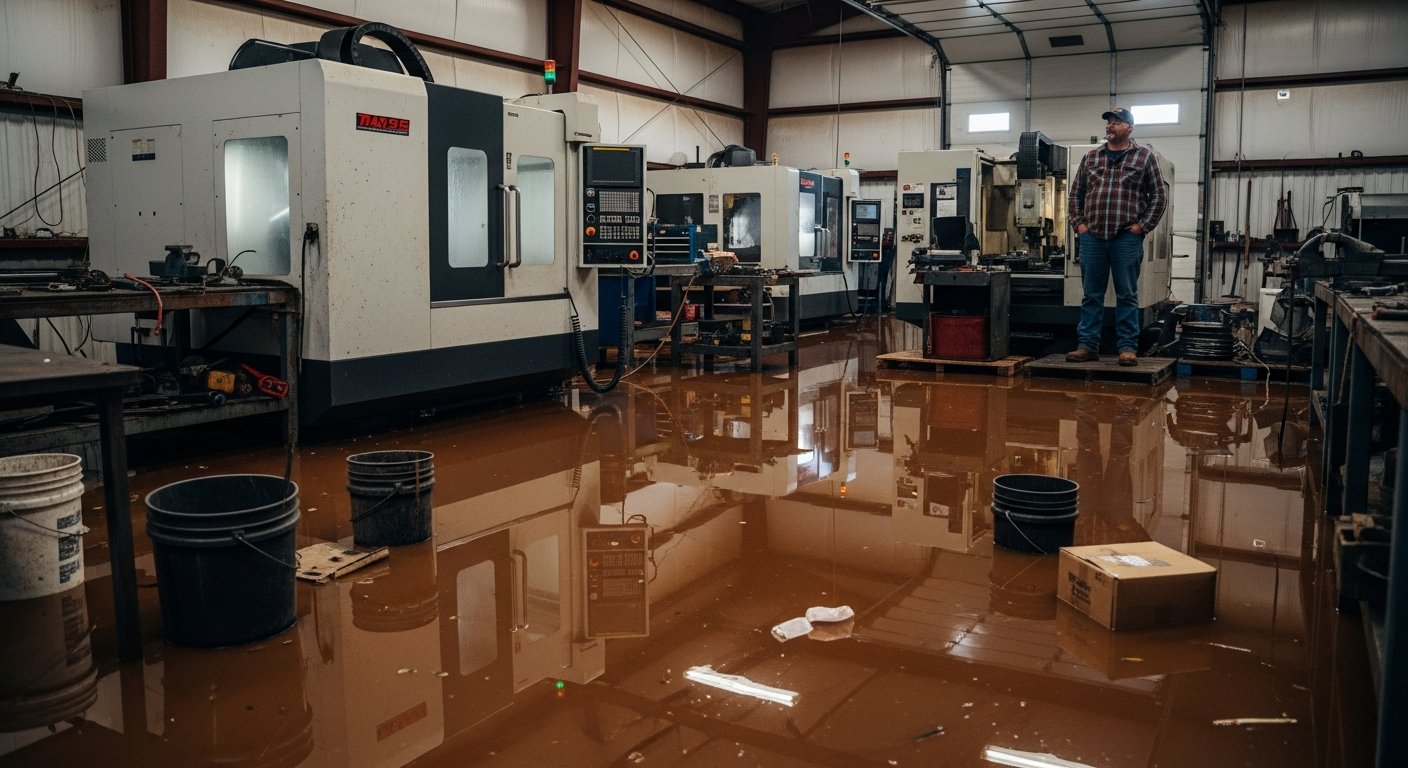
Consider this scenario: a plumbing contractor in San Antonio has a workshop filled with expensive tools and equipment. A sudden flash flood, a common occurrence in Texas, swells a nearby creek and sends water rushing into the shop. The contractor's standard commercial property policy would likely deny the claim, citing the flood exclusion. Without separate flood coverage, the owner would face the full cost of replacing damaged machinery, inventory, and repairing the building's interior. This is a risk no business can afford to ignore, especially when a single claim can easily exceed $100,000.
NFIP Coverage Limits and How They Apply to Your Business
When most Texas business owners think about flood insurance, they picture the National Flood Insurance Program. NFIP policies are available for both building and contents coverage, but they come with strict limits. For commercial properties, the NFIP offers up to $500,000 for the building structure and up to $500,000 for its contents. While that sounds substantial, it may not be enough for a large warehouse, a retail store with high-value inventory, or a contractor with a fleet of expensive equipment stored on-site.
There are also important limitations within NFIP policies. For example, the policy typically covers the building and its foundation, but it may not cover damage to items in a basement, such as boilers, furnaces, or elevators. It also has a 30-day waiting period before coverage takes effect, which means you cannot purchase a policy when a storm is already brewing. This waiting period is a critical detail for Texas businesses, as hurricane season runs from June 1 to November 30, and severe storms can happen year-round.
Another key aspect of NFIP coverage is the claims process. Adjusters are often overwhelmed during major disasters, leading to delays in payouts. Claims are also subject to the "Increased Cost of Compliance" (ICC) provision, which provides up to $30,000 to help bring your building into compliance with floodplain ordinances after a flood. However, this is not automatic and requires specific documentation. For many Texas small businesses, the NFIP is a solid starting point, but it is rarely the complete solution.
Private Flood Insurance for Texas Businesses: A Better Fit?
In recent years, the private flood insurance market has expanded significantly in Texas. Private insurers offer policies that can provide higher limits, broader coverage, and more flexibility than the NFIP. For example, a private policy might cover business interruption losses, which are not included in standard NFIP policies. This coverage can be a lifeline when your business cannot operate for weeks due to flood damage, allowing you to cover payroll and ongoing expenses while you rebuild.
Private flood insurance also often has a shorter waiting period, sometimes just 15 days, compared to the NFIP's 30-day wait. This can be crucial for a Texas business that needs coverage quickly, perhaps due to a recent property acquisition or a lease requirement. Additionally, private policies may offer replacement cost coverage for your building and contents, instead of the actual cash value (ACV) that the NFIP typically uses. ACV subtracts depreciation from your payout, which can leave you without enough money to replace damaged items with new ones.
However, private flood insurance is not for everyone. It is often more expensive than NFIP, especially in high-risk flood zones. Premiums can vary widely based on the property's specific flood risk, the building's construction type, and the coverage limits you choose. An experienced independent agent can help you compare private flood quotes against NFIP rates to determine which option offers the best value for your specific risk profile. For many Texas businesses, a hybrid approach works best: an NFIP policy for the building and a private excess policy for additional contents and business interruption coverage.
Key Coverage Areas in a Commercial Flood Policy
Whether you choose NFIP or private coverage, you need to understand the specific elements of a commercial flood policy. This knowledge will help you make informed decisions about your coverage limits and endorsements. Here are the main areas you should evaluate when reviewing your options:
- Building coverage: This protects the physical structure, including the foundation, walls, roof, electrical systems, plumbing, and permanently installed equipment like HVAC units and water heaters.
- Contents coverage: This covers your business's personal property, such as furniture, computers, inventory, raw materials, and tools that are not permanently attached to the building.
- Business interruption (lost income): This is an optional coverage available through private insurers that reimburses you for lost net income and ongoing expenses if your business is forced to close due to a flood.
- Debris removal and cleanup: Some policies cover the cost of removing debris and cleaning up your property after a flood, which can be a significant expense.
- Ordinance or law compliance: This coverage helps pay for the cost of rebuilding your property to meet current building codes, which can be stricter than the codes in place when the building was originally constructed.
It is crucial to review the policy exclusions carefully. Most flood policies do not cover damage to vehicles, which would fall under your commercial auto policy. They also typically exclude mold and mildew damage unless it is a direct result of the flood and is reported promptly. Understanding these gaps allows you to address them with your agent, either through endorsements or by purchasing separate coverage.
How to Determine Your Flood Risk and Coverage Needs
Before you purchase flood insurance, you need to assess your business's specific flood risk. The Federal Emergency Management Agency (FEMA) has designated flood zones across Texas, with the highest risk areas labeled as Special Flood Hazard Areas (SFHAs). If your business is in an SFHA and you have a federally backed mortgage or loan, your lender will likely require flood insurance. However, do not assume you are safe just because you are outside a high-risk zone. In fact, FEMA reports that over 20% of flood insurance claims come from properties outside high-risk areas.
To get a personalized risk assessment, you can use FEMA's Flood Map Service Center or consult with a local agent who understands Texas's unique hydrology. Consider factors like your proximity to rivers, creeks, and bayous, the local drainage infrastructure, and your building's elevation. For example, a business in a low-lying area near the Gulf Coast faces a much higher risk of storm surge than a business in the Hill Country, but both can experience flash flooding from intense rainfall.
Once you understand your risk, you can work with your agent to determine appropriate coverage limits. A common mistake is to insure only the building's market value, not its replacement cost. Replacement cost is what it would actually cost to rebuild the structure from the ground up, which can be much higher than the assessed tax value. Similarly, for contents, you should create a detailed inventory of everything you own, including serial numbers and photographs. This inventory will not only help you set coverage limits but will also streamline the claims process if you ever need to file a claim.
The Cost of Flood Insurance in Texas: What to Expect
The cost of commercial flood insurance in Texas varies dramatically. For an NFIP policy, the premium is determined by your property's flood zone, its elevation, the deductible you choose, and the coverage limits. The average cost for a commercial NFIP policy in Texas is around $2,500 to $4,000 per year, but it can be much higher for properties in high-risk zones with older construction. Private flood insurance premiums are more varied, and you might find quotes ranging from $1,500 to $10,000 or more, depending on the insurer's risk model and the level of coverage.
To control costs, you have several options. Choosing a higher deductible, such as $10,000 or $25,000, will lower your annual premium significantly. However, you need to have that amount available in cash to cover the initial damage before insurance kicks in. Another way to reduce costs is to implement flood mitigation measures, such as elevating your HVAC systems, installing flood vents, or moving critical equipment to higher floors. Some insurers offer premium discounts for these improvements, and they also reduce your actual risk of damage.
It is also important to note that flood insurance premiums are tax-deductible as a business expense. This can help offset the cost. Additionally, if you have a business owners policy (BOP) with Texas Policies, we can often bundle your flood coverage with other commercial policies to unlock discounts. While flood insurance is an added cost, it is a fraction of what you would pay to repair or rebuild your business out of pocket after a major flood.
Steps to File a Flood Claim Successfully
Filing a flood claim is a stressful process, but being prepared can make it smoother and maximize your payout. Here are the steps you should take immediately after a flood event:
- Document everything: Before you move or clean anything, take photos and videos of all damaged property, including the building, contents, and the water level line. Create a written inventory of every damaged item, including its age, brand, model, and estimated value.
- Notify your insurer as soon as possible: Call your insurance agent or the carrier's claims hotline immediately. The sooner you report the claim, the sooner an adjuster can be assigned to your case. Delay can complicate the process, especially during a widespread disaster.
- Protect the property from further damage: Make only temporary repairs to prevent additional damage, such as covering a hole in the roof with a tarp. Keep all receipts for these emergency repairs, as they are typically reimbursable.
- Meet with the adjuster: The adjuster will inspect the damage and estimate the cost of repairs. Provide them with your inventory and any documentation you have. Do not automatically accept their first offer; you have the right to negotiate or hire a public adjuster to represent you.
- Keep a claims diary: Record every phone call, email, or meeting with your insurance company, including the date, time, and the name of the person you spoke with. This will help you track the progress of your claim and hold the insurer accountable.
After you submit your claim, the insurance company will review it and either approve or deny it. If approved, they will issue a payment, but it may be less than the full amount of your loss if you have depreciation or coverage limits. If you disagree with the adjuster's estimate, you can appeal the decision or hire an independent appraiser. This is where having a trusted agent like Texas Policies can be invaluable; we can advocate on your behalf and help you navigate the appeals process.
How an Independent Agent Simplifies Flood Coverage
Navigating commercial property insurance flood coverage in Texas can feel overwhelming, especially with the differences between NFIP and private policies. That is why working with an independent agency like Texas Policies is a smart business decision. We do not work for a single insurance company; we represent multiple carriers and can compare their policies to find the best fit for your budget and risk profile. This means you get unbiased advice and a range of options, not just a one-size-fits-all product.
Our team understands the unique challenges that Texas small businesses face, from contractors with expensive equipment to shop owners with high-value inventory. We can help you determine the right coverage limits, choose the appropriate deductible, and identify valuable endorsements like business interruption coverage. We also provide certificate support for your clients and landlords, ensuring that your flood coverage meets all contractual requirements.
Best of all, our services come at no cost to you. We are compensated by the insurance carriers, so our quotes are free and there is no obligation. You get the peace of mind that comes from knowing your business is protected, without the headache of shopping around and trying to decipher insurance jargon on your own. In a state that experiences some of the most volatile weather in the nation, having a dedicated agent who knows the local landscape is a competitive advantage.
Flood risk is an ongoing reality for Texas businesses. It is not a matter of if a flood will happen, but when. The right commercial property insurance flood coverage can be the difference between a minor disruption and a business-ending catastrophe. Take the proactive step today to protect your investment, your employees, and your future.
Contact Texas Policies today for a free, no-obligation flood insurance quote. Let us help you secure the coverage you need so you can focus on growing your business, no matter what the weather brings.